The Sekhmet Chapel at Karnak: A Quiet Lesson in Perspective
The most powerful thing I did in Egypt wasn’t a checklist. It was three minutes in a dark room.
Quick Answer
If you’re going to Egypt for the temples, put this on your list: the Sekhmet chapel inside the Temple of Ptah at Karnak. It’s small, dark, and unforgettable—part history, part initiation, part “oh… that’s what I needed to remember.”
In this post, you’ll get:
∙ the grounded context on Sekhmet (without the fluff)
∙ what it felt like to enter the chapel + what happened inside
∙ the message I received—and how to use it when you’re separating signal from noise
∙ side note: one-paragraph packing tips (because yes, you still need the scarf)
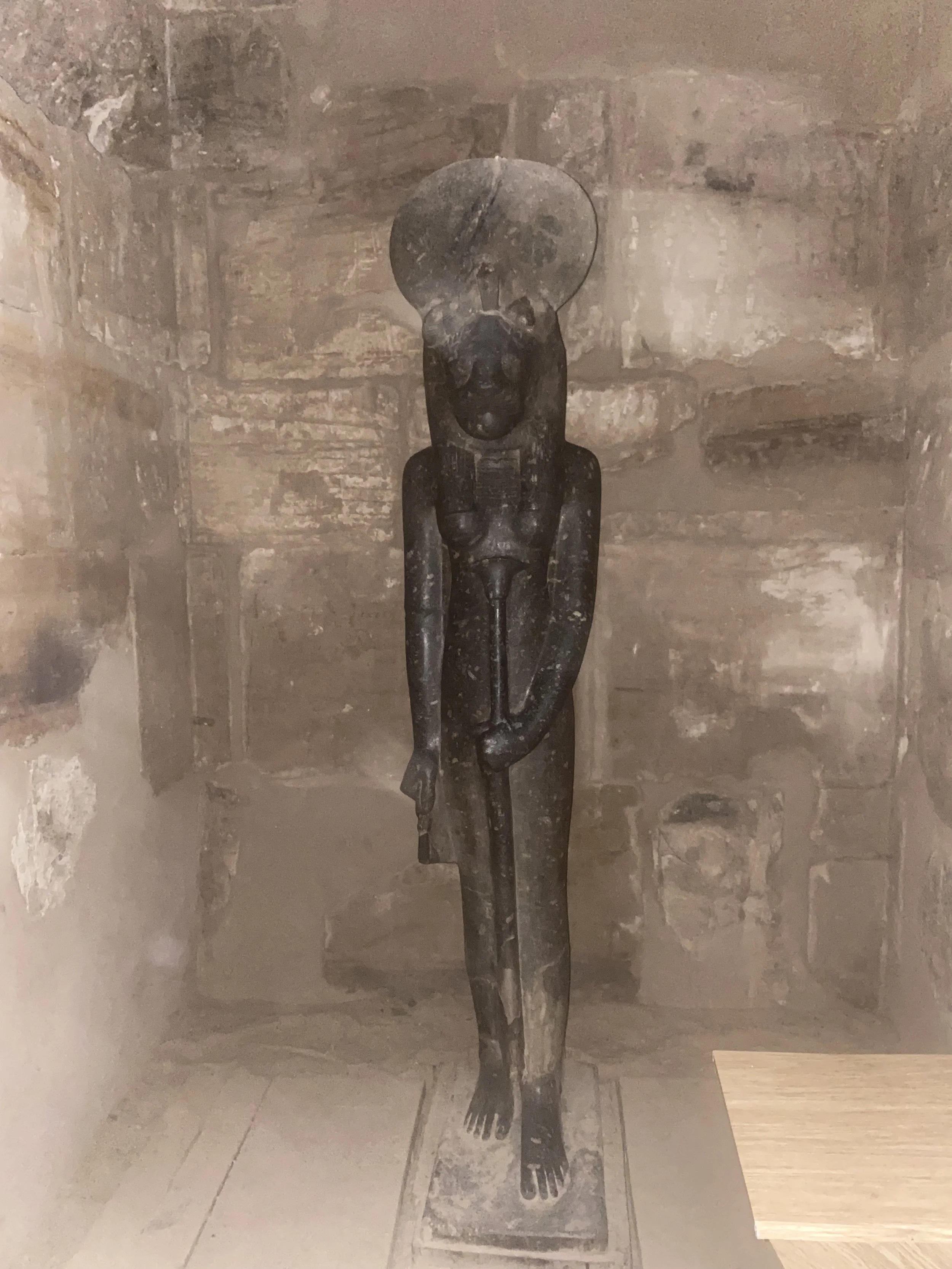
Sekhmet Chapel at Karnak
First: who is Sekhmet?
Sekhmet is the lioness-headed Egyptian goddess often associated with destruction and protection—and also healing. She’s linked to the fiery “Eye of Ra” mythos, and ancient Egyptians connected her energy to both illness and medicine (the kind of paradox that feels… real).
Translation for modern life:Sekhmet doesn’t do spiritual bypassing.She burns away what’s false. She strengthens what’s true.
Where to find the chapel
Inside the vast Karnak temple complex (a whole city of temples), there’s a smaller shrine: the Temple of Ptah, north of the main Amun precinct.
Within that temple is a small chapel where a statue of Sekhmet stands—and the light comes from a small opening in the ceiling, so your eyes adjust slowly as you enter.
It’s intimate. It’s quiet. It’s not a “tour group moment.”It’s a presence moment.
Timing note: Early morning or late afternoon = fewer tour groups, more space for the experience.
What it was like to enter the room
We had a guide who spoke to the guards and got permission to let us in.
And then it happened fast.
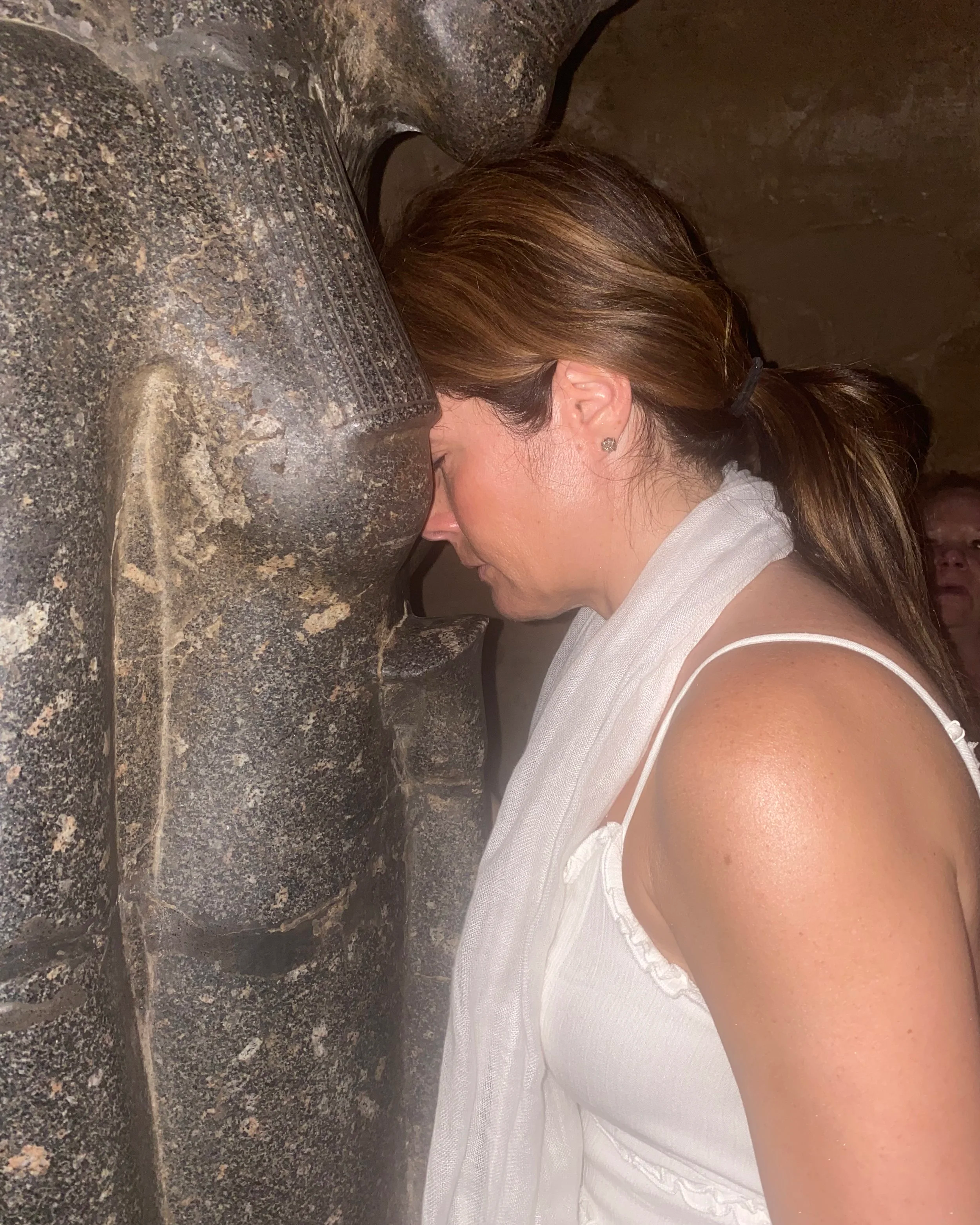
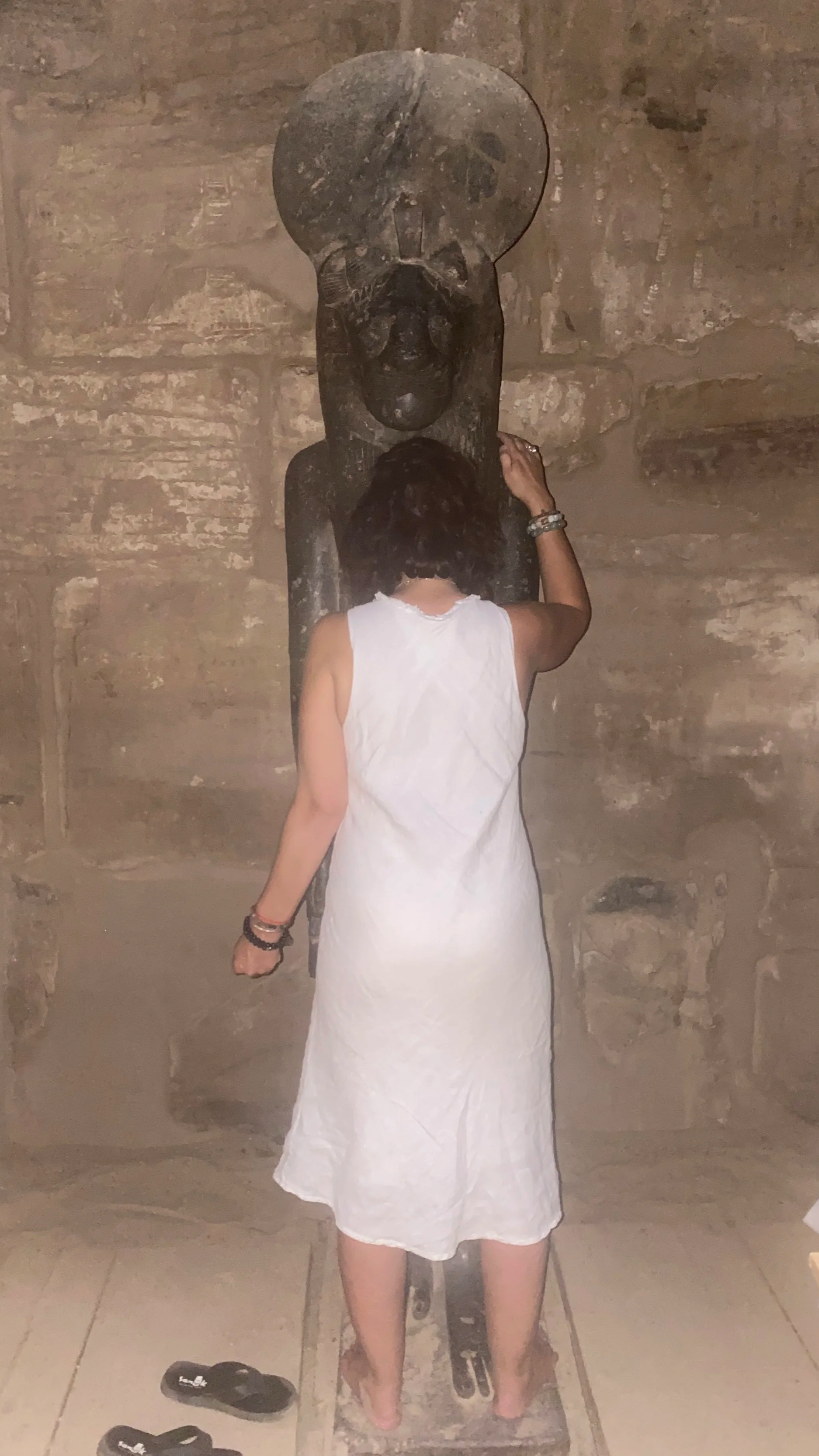
You step into the dark.A guard places a crystal in your hand.Then he guides you forward—your forehead pressed to the statue’s heart.
The energy in the room is palpable. Not dramatic. Not showy.Just… dense. Like the air has weight.
This may not happen for everyone—access and rituals can vary. But here’s what unfolded for me:
People usually receive a message.
Mine was simple:
“Your perspective creates the narrative for your soul.”
Not “manifest harder.”Not “be more positive.”Just this:
Your perspective is power.
What that message actually means (and why it matters)
Most of the women I work with aren’t confused because they lack intelligence.
They’re confused because they’re living inside too much input:
∙ other people’s expectations
∙ spiritual content that contradicts itself
∙ fear disguised as “being realistic”
∙ success that looks good… but doesn’t feel true
Sekhmet’s message cut right through all of it:
Your perspective decides the story you live inside.
And the story you live inside shapes every decision you make next.
So the question becomes:
What narrative are you feeding—without realizing it?
Here’s what that looked like for me: I came to Egypt carrying a story that I needed to “prove” my work was legitimate—through more credentials, more visibility, more external validation. Standing in that chapel, forehead to stone, I realized I’d been asking the wrong question. It wasn’t “Am I enough yet?” It was “What am I choosing to see as true about my path?”
The shift wasn’t dramatic. But it was immediate.And it’s still guiding decisions I make now.
The Sekhmet Perspective Audit (steal this)
Here’s what I use with clients when they’re trying to separate their truth from the noise.
If you’re in that season, answer these honestly:
1. Where am I treating my fear as fact?
2. What am I assuming is “just how it is”… that might be a story?
3. What would change if I believed I’m allowed to choose again?
4. What do I already know—but keep postponing?
5. What’s the simplest next step if I trusted myself?
You don’t need ten answers.You need one clear one.
Side note: packing (keep it simple)
This is the one question I always get—what do I pack?!
A lightweight scarf (for coverage), closed-toe shoes (dust + stone), sunscreen + a hat, a power bank, and small cash for tips. Keep your day bag secure and close to your body.
That’s it. No overpacking required. The main thing to note is that Egyptians dress pretty conservative. But it doesn’t mean you have to be fully covered all the time. A great linen scarf will be your best friend.
But do yourself a favor pack everything for Egypt in a carry-on suitcase. Just roll everything up, and since everything you’ll be packing is lightweight, you will have enough room for a 10-day trip.
If this post stirred something in you… start here
Sometimes a sacred site doesn’t give you “more spirituality.”It gives you clarity.
And clarity without translation just becomes another beautiful idea you don’t act on.
If you want a practical way to turn that clarity into movement:
∙ Start here: Know Your Chart, Know Your Mission
∙ Go deeper (1:1): Book a Soul Blueprint Session
Because you don’t need more information. You need translation.
FAQ
Is the Sekhmet chapel always accessible?
Access can change and may be restricted at times—go with a respectful guide, follow local rules, and treat it like a sacred space.
Was the crystal part “official”?
That was my experience in the moment. Rituals can vary depending on the guards, the guide, and the day. Take what’s meaningful, leave what isn’t, and stay present with whatever unfolds for you.
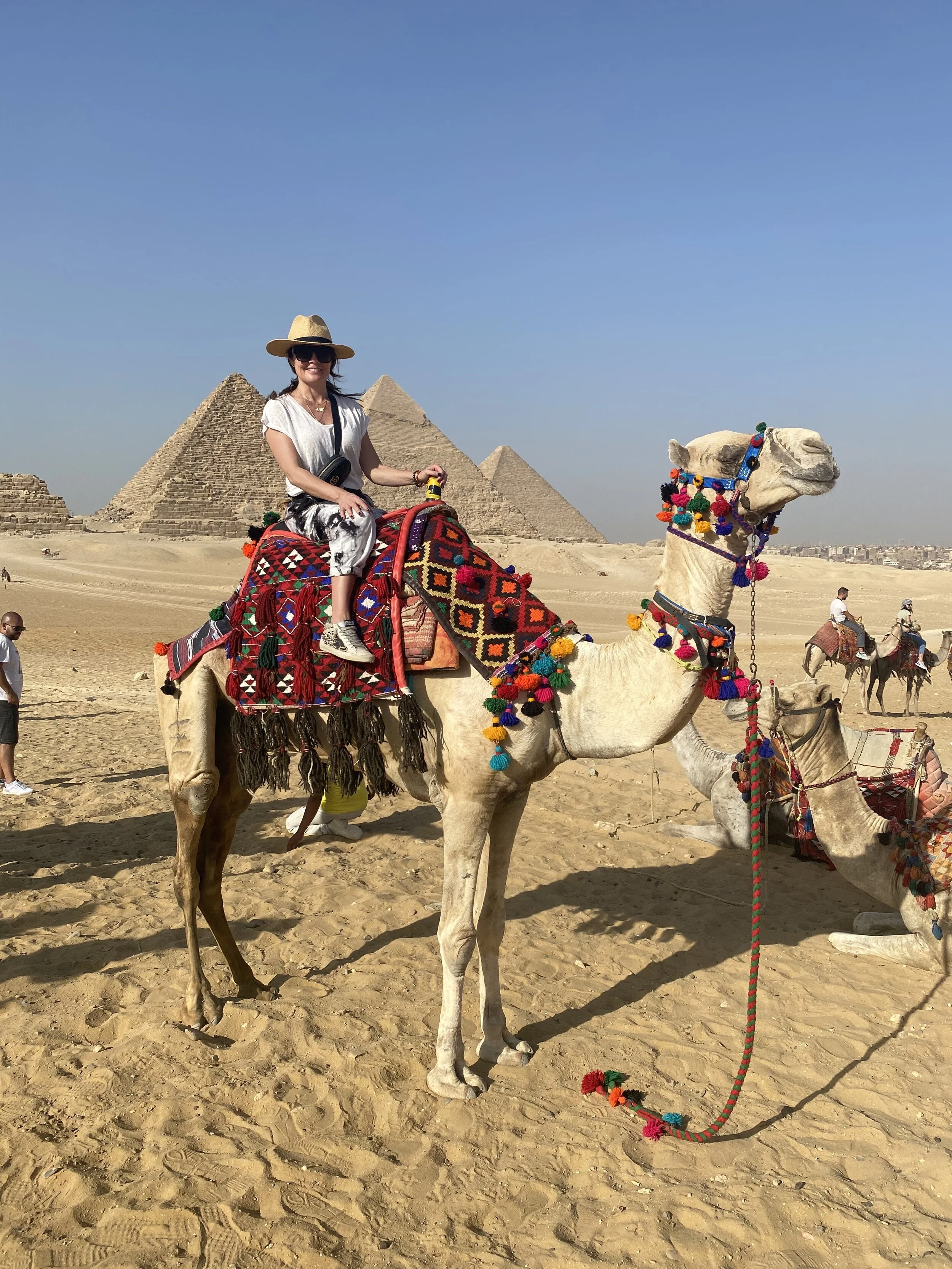
Trust in God but tie up your camel. -Arabic Proverb