Intuition or Anxiety? How to Tell the Difference When You Don't Trust Yourself

Quick answer:
Intuition and anxiety can both show up as strong internal signals, but they tend to have different qualities. Anxiety is often repetitive, urgent, and focused on what might go wrong. Intuition is usually simpler and steadier, even when what it is telling you is uncomfortable. The more you understand your own patterns, the easier it becomes to tell the difference.
One of the questions I hear all the time is some version of this:
Is this my intuition, or am I just anxious?
It makes sense that this is hard to answer.
Both can come from inside you. Both can create a physical response. Both can tell you to pay attention. And if you have spent years second-guessing yourself, it can be difficult to know which internal voice deserves your trust.
This is where the idea of Signal vs. Noise becomes useful.
The goal is not to treat intuition as good and anxiety as bad. Anxiety can carry important information, too. Fear can protect you. Your nervous system notices things before your conscious mind catches up.
But not every fear is a warning, and not every strong feeling is intuition. Discernment is learning the difference.
Anxiety tends to make a case
Anxiety usually has a lot to say.
It often comes with a running commentary:
What if this goes wrong?
What if I regret it?
What if they leave?
What if I embarrass myself?
What if this is a terrible decision?
What if I never get another opportunity?
The mind starts gathering evidence. Then it gathers more evidence to support the evidence it has already found.
Soon you are not simply considering a decision. You are trying to solve every possible future outcome before you are allowed to move.
That is one reason anxiety can feel so convincing. It is not necessarily irrational. Sometimes it is highly articulate.
But volume is not the same thing as truth.
Intuition is often much simpler
Intuition usually does not need a twenty-page argument. It may be as basic as:
I don't want to do this.
Something feels off.
This is the right direction.
Not yet.
Call her.
Leave.
Stay.
There may still be fear around the answer, but the answer itself often feels surprisingly uncomplicated. You can receive a very clear internal "no" and then spend the next three days arguing with it because the consequences of listening to it are inconvenient — that doesn't necessarily make the original knowing less true.
The Signal can be uncomfortable
One of the easiest mistakes to make is assuming intuition should feel peaceful.
Sometimes it does. Sometimes the Signal tells you something you really do not want to hear.
You may know a relationship is over before you are ready to end it. You may know a job is no longer right, even though leaving it creates uncertainty. You may know you need to have a conversation you would much rather avoid.
The fear that follows does not automatically invalidate what you knew before the fear showed up. This is why I like separating the message from the reaction to the message.
You might know: I need to make a change.
Then your nervous system responds: But what happens next?
Those aren't necessarily the same voice.
Pay attention to timing
One thing I find helpful is noticing what came first.
Was there a quiet recognition, followed by a flood of thoughts? Or did the experience begin with panic, rumination, and an urgent need to get certainty?
The order can tell you something. Sometimes the Signal arrives first, and the noise rushes in afterward — you know what you want, and then your mind immediately starts telling you why you cannot have it. Other times fear leads from the beginning.
This is not a perfect rule, but it is useful information.
Your body can help, but it is not an infallible lie detector
People often say, "Just listen to your body."
I agree with the spirit of that advice, but I think it needs more nuance. Your body holds a tremendous amount of information. It also holds conditioning.
A situation can feel unsafe because it genuinely is unsafe. It can also feel unsafe because it is unfamiliar.
A healthy boundary may feel uncomfortable if you were taught that saying no makes you selfish. Being seen may create anxiety if you have spent years making yourself smaller. A stable relationship may even feel strange if chaos is what your nervous system recognizes as normal.
So yes, pay attention to the body. But also ask what the sensation might be connected to.
The question is not simply, "Does this make me nervous?" The better question may be: What is this nervousness trying to tell me?
Self-knowledge makes intuition easier to recognize
This is one of the reasons I keep returning to the idea of knowing yourself.
If you know your patterns, you have context. You know whether you tend to catastrophize. You know whether you avoid conflict. You know whether you stay too long, or whether you bolt the minute something becomes emotionally uncomfortable. You know whether you need a lot of certainty before you act.
That awareness does not eliminate fear, but it gives you a much better chance of recognizing what is actually happening. Without self-knowledge, every internal reaction can feel equally authoritative. With self-knowledge, you can start saying: I know this pattern. I know what I do when I am afraid. This feels different.
That is discernment.
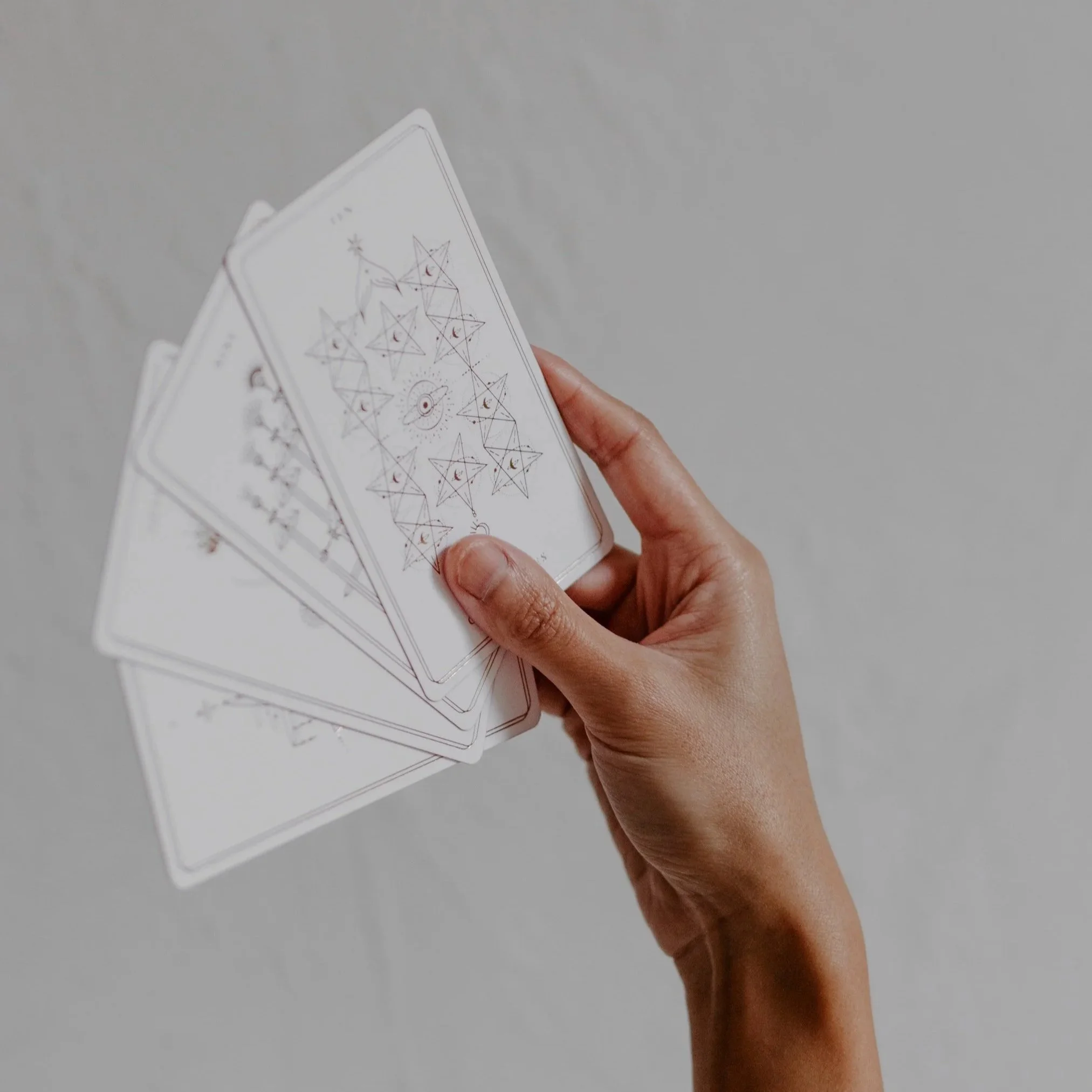
This is where outside tools can help — or make things worse
When we do not trust ourselves, we often look for someone else to tell us what the feeling means.
That is understandable. We ask friends. We ask therapists. We pull tarot cards. We look at astrology. We see a psychic. We search online. Now we can ask AI twenty different versions of the same question until we get the answer we were hoping for.
Outside perspective can be extremely useful. But there is a point where more input creates more noise.
One of the practices I come back to is asking yourself what you think before bringing in the outside information — not because your first answer is always right, but because hearing it first means you get a vote before everyone else does.
Astrology can show you the pattern without making the decision
This is one of the ways I use astrology in my work.
A birth chart can help illuminate how someone tends to approach uncertainty, relationships, conflict, responsibility, change, and decision-making. It can show patterns. It can give language to tensions you already feel. It can help explain why one person needs time before they know and another person knows almost immediately but talks themselves out of it.
What it should not do is become another authority you hand your life over to. The chart can help you understand the instrument. You are still the one listening.
A few questions to ask when you cannot tell
When you feel torn between intuition and anxiety, try slowing the process down.
If I knew I could handle the outcome, what would I choose? That question removes some of the fear around consequences and lets you hear what you actually want.
You can also ask what you knew before you started overthinking this, or whether this feeling is asking you to pay attention versus asking you to make the uncertainty disappear. Those are very different things.
And sometimes the most useful question is simply: do I need an answer today? Urgency creates a tremendous amount of noise. Time can be clarifying.
You do not need perfect certainty
I think this is the piece many people miss.
You may never get to 100 percent certainty. You can make a deeply aligned decision and still wonder whether you are doing the right thing. You can trust yourself and still feel scared.
Trusting yourself doesn't mean the questioning stops — it means you know how to find your way back. You know your patterns well enough to recognize when fear has taken over the conversation. You know how to get quiet enough to hear what remains underneath it. And you know that outside information is there to support your discernment, not replace it.
The Signal is not always the loudest thing inside you. Usually, it is not.
The work is learning its voice.
Frequently Asked Questions
What does intuition feel like?
Intuition can feel like a quiet knowing, a simple sense of yes or no, a body sensation, an image, or a thought that arrives without a long chain of reasoning. It is often less repetitive than anxiety.
Can anxiety feel like intuition?
Yes. Anxiety can create strong physical sensations and a powerful sense that something is wrong. That is why understanding your own patterns and triggers is an important part of discernment.
If something makes me anxious, does that mean I should not do it?
Not necessarily. Anxiety can mean something is unsafe, but it can also mean something is unfamiliar, vulnerable, or outside your usual pattern. Context matters.
How can I get better at trusting my intuition?
Spend more time noticing your internal reactions before immediately asking other people for their opinions. Journaling, meditation, quiet walks, and reflecting on past decisions can all help you recognize your own patterns.
Can astrology help with intuition?
Astrology can support self-knowledge by helping you understand recurring patterns, motivations, and responses to stress or change. It works best as a tool for reflection rather than a source of instructions.